Thursday, April 23, 2026

Subtley is Dead, or How to Make Sure Your Players Are Informed

 In the previous blog post I mentioned switching up the regular by the book monster your players may be used to and giving them a bit of spice to keep your players on their toes. This does potentially have a risk however, and one I want to address in this article. Here's how to avoid the feeling of the ol' bait & switch, and a divergence into why Traps and Puzzles kind of suck. 

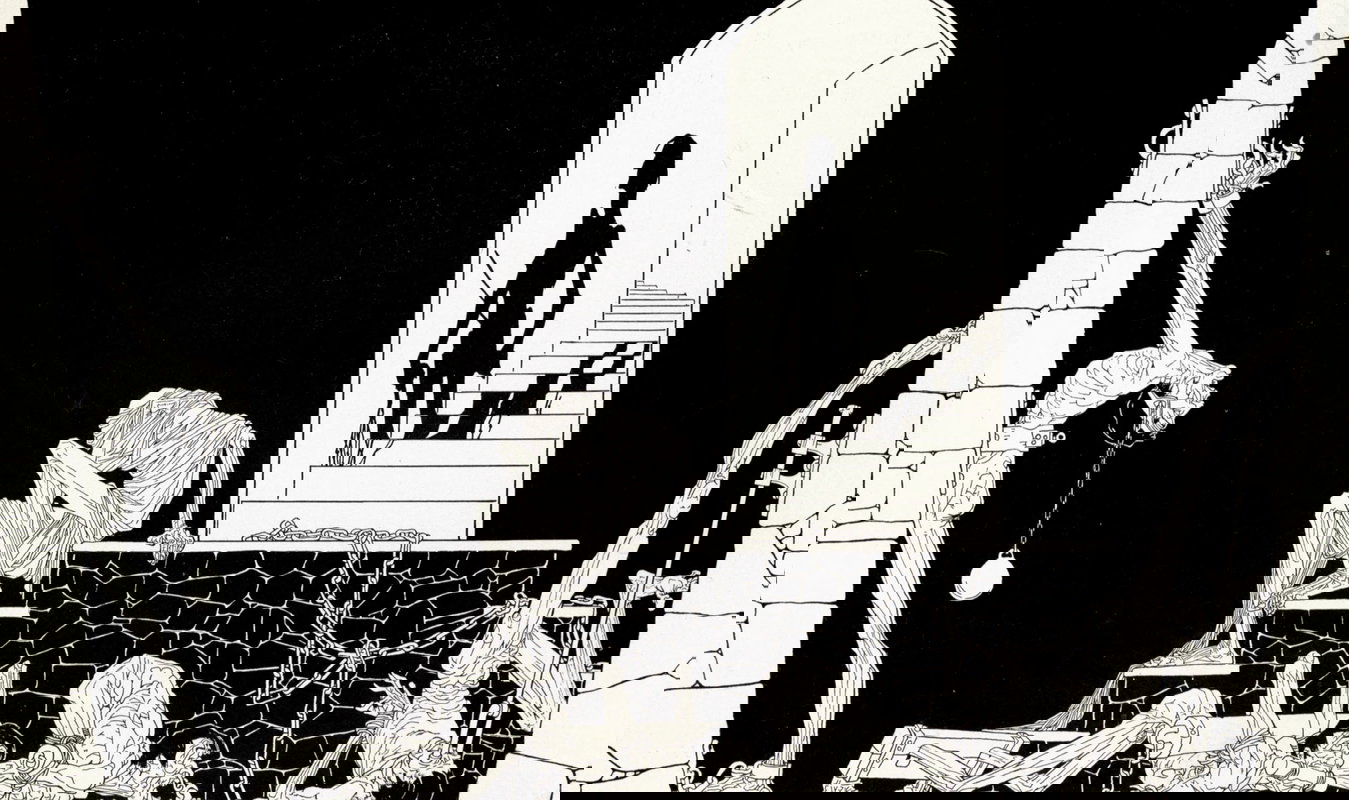
https://images.pdimagearchive.org/essays/relaxations-for-the-impotent/01-fantaziusmallare00hechrich_0137-edit.jpg?width=1580&height=800 

 Fantazius Mallare by Wallace Smith (ca. 1922)

If you've been a GM for a while you've undoubtedly run into the issue where you have tried to lay down clues and hints for the players to pick up on and they've missed them entirely, often leading to a stalled game and miffed feelings. It happens to everyone, and it's no ones fault, it's just part of the learning process of GMing. The same thing can happen if I've been describing a troll looking monster terrorizing a village and then have it be spit fire and be immune to burning, the expectation versus outcome aren't in sync, and the Players can end up feeling like it was unfair. The best way to avoid this across the board is to kill subtlety.

Being subtle doesn't really work in TTRPG's (yes, some groups are exceptions) for a few different reasons:
1. The GM holds all the knowledge about the adventure, the world, and intricacies of the situation, but only a sliver of this is ever shown to the players. It's hard to parse exactly what the players know when as the GM you're inevitably holding dozens of extra threads and hooks at any one time. The hints you think are obvious could be almost impossible for the players to solve because they are missing key info that you think they have or can put together from context.
2. The medium of TTRPG's itself doesn't do detail well; think about walking into a dungeon room and the GM reading out a two paragraph description of the room where the key to a puzzle is a one off innocuous line in the description, "Inverted golden stars are embedded at the corner the white and red floor tiles." In fiction as a character walking around the stars would be easy to see and the pattern that they make would be something we could infer from just looking at them. But the likelihood that the gets remembered during that long description, especially if there is a monster in the room that needs to be dealt with first, is very very low.
3. The juice is not worth the squeeze. If you get the players to look for subtleties in the dungeon it very well could lead them to the dreaded "10ft pole creep", where every step they take is highly inspected and questioned so they don't miss anything. Immediately grinding the pace of the game to an unsustainable crawl.

This applies to Traps, Puzzles, and any sort of "Mix-up" that you are tossing into your game. You hit a player with a random trap that they had no warning of, it's going to feel like an unfair act of GM fiat. You hand them a puzzle without a obvious solution and they are going to get frustrated and bored. That troll you send against them that is immune to normal troll weaknesses? It's going to feel unfair unless you clue them in early in that encounter.

So how do we avoid these issues if we still want to include these kinds of challenges in our game? Well that's simple, be obvious about it. There is no inherent reason to obfuscate the hints or threats from the players, it doesn't add value if your players ask the specific right combination of questions to find out that the golden stars are related to the puzzle. I'm not saying Give them the answer, but you should give them the pieces that allow them to come up with the answer, and there are ways to do this so it doesn't feel to forced.

One way to do this is to tie the clues into the descriptions themselves. Instead of saying "Inverted golden stars are embedded at the corner the white and red floor tiles." you can just say "Inverted golden stars are embedded at the corner the white and red floor tiles, they appear to make a sweeping pattern across the floor by how the star is rotated. You even see a few that are depressed into the floor slightly." This removes the question if they are important or not, it solves the problem of "my character would have seen this", and it still leaves them with the actual problem: "What is the pattern we need to move the stars in?"

This works even better for traps, the very first thing I do when I run a dungeon that contains traps is make the first trap they run into always already tripped when they get there, this ensures they know what they are getting into and sets the tone for the rest of the dungeon. When they stumble upon an untripped one I think about the dungeon itself, has it been around a long time? Do these traps reset themselves? Do they use anything caustic or that would leave evidence? and I make my descriptions reflect that. Even in the best case scenario for the trap, I'm still going to give the players Something as long as they are taking their time to look (if they are running, they are S.O.L). Depressions in the wall, odd looking carvings, spouts on the ceiling, that sort of thing. 


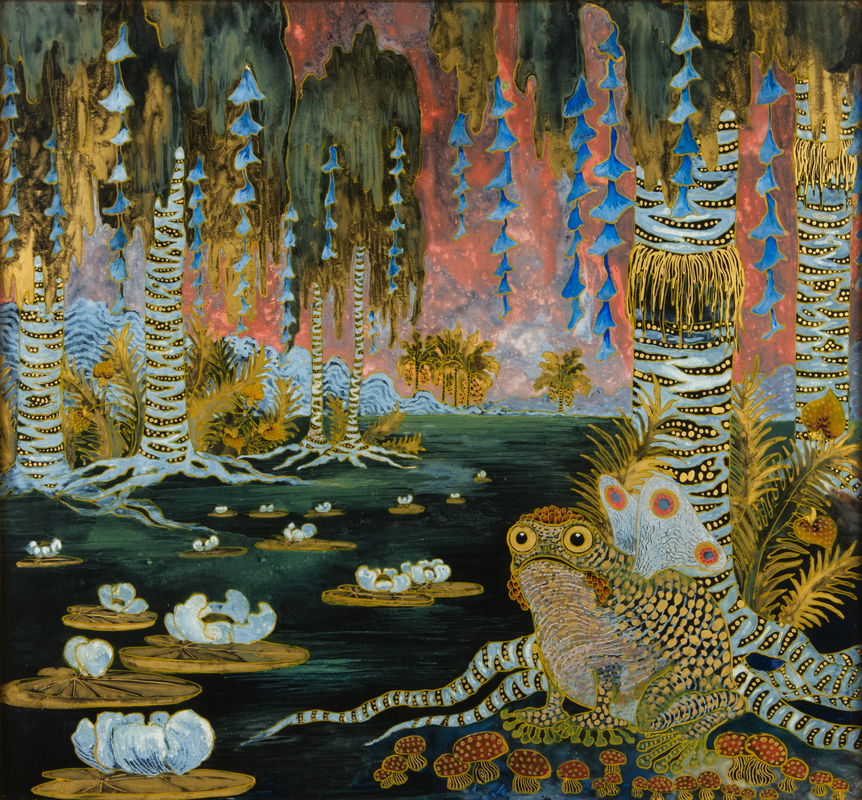
The Seven Headed Dragon by John D Batten

Monsters are the same jam, be they normal monsters, high level monsters, or my switched up monsters, I try to foreshadow them before the party actually makes contact so they can prepare themselves for whats to come. This is especially important for high-level or switched up monsters however as they require an extra layer of description to keep the players from stumbling to their doom (if that's the kind of game you're playing, then ignore this). I personally love seeing the panicked reaction of the players as I seed the evidence of the powerful dungeon denizen and they realize that they are well and truly screwed. During the beginning of the actual conflict with the monster, I tend to reinforce any immediate danger that the creature poses, i.e. dripping poison, rending claws, etc. If the monster has a big breath weapon or special ability I will tend to give a heads-up near the beginning of combat that it may do something, such as smoke emanating from the dragons nostrils, the goblin shaman beginning to chant, or a sharp intake of breath from the harpy.

These sorts of things can also be embedded directly into random encounter tables. Adding spoor and evidence of monsters and traps can be a very evocative addition to your encounter tables. A corpse studded with crossbow bolts and a trail of blood leading off to trap room; a trail of drips of partially melted stone leading down a hallway; a room of corpses with burnt out torches strewn about, the corpses seem to have been torn apart and partially devoured. This has an added benefit as well, it ramps up the dread and unease of the session. In horror movies one of the classic big ideas is to minimize showing the monster until late in the movie, dropping hints and glimpses of the monster before the big reveal. This is doing much the same thing, drip feeding info about a threat that haunts the halls that the players are exploring.

And try to remember to describe things in a way that uses more senses than just sight. It makes the world feel more alive.

Monday, April 6, 2026

Art - Learning, Practice, and Progress

If someone told you they were going to play sports at a professional level by the end of the year but they don't even practice regularly, would you believe them? This is how Art careers work as well, there is a surprising amount of crossover between Art skill and Sports skill. Both are physical activities that are a coordination exercise between hand and mind, both are using the mind to see beyond what is happening in the present but what will happen next and how is the current action affecting the whole. It is better to treat the journey of learning art as a marathon rather than a sprint and accept that it will likely take you quite a while to get to the "professional" level.

Digital painted studies of Random objects on a desk. A study of weapon silhouttes, and a study of a landscape

Studies done by Me (Redvirus) in 2019 (Digitally w/ Procreate)


Souls Series Weapon Poster done by Me (Redvirus) in 2025 (Traditionally w/ Marker, Watercolor, Ink)

That's not to say there aren't more efficient paths however! I've spent the last decade trying Art (Drawing and painting specifically) and bouncing off, only to find myself drifting back. Over the last three years however I've started making substantial progress, and in the last year really hit my stride for consistent improvement. I want to be clear this is not a "Follow these steps and go from Zero to Hero in a year." type of pitch, people who make those promises are lying or trying to sell you something and lying. The following tips are the most impactful changes that I made to how I practice, and I hope they can help you too:

Tip 1: JIT Practice 

Just in Time or JIT in the concept of learning something as needed to solve a problem instead of learning it ahead of time and just hoping you remember, also known as Just in Case (JIC) learning. For years when I started out (and occasionally still) I focused on learning things just because I thought they were good to know. "I should learn anatomy!" or "Learning how to draw clouds would be cool!" would be my primary driver to draw and if you had come back a few days later and asked me to draw those things, ...well I probably wouldn't have been able too.  

The reason for this (in my non-expert understanding) is that when you learn something new it makes a new neural pathway associated with that knowledge. If that new connection is not associated with an existing 'memory' it is harder to recall that information so it is more likely to be 'forgotten'. JIT practice alleviates this issue by making sure you are only learning things when you need them, which creates a connection between the project you are working on and the knowledge itself, meaning it is easier to recall! Realistically I think everyone has experienced this first hand in other aspects of our lives; doing something at work and get stuck, get some help from a coworker then proceed to keep doing that thing, that kind of knowledge embeds itself deep because it makes strong connections to other existing memories.

So what does this look like in practice? It looks like setting aside your tutorials, and How-to's and instead focusing on a piece. This could be a sketch, a life study, or a bigger finished piece you are working on. As you work on that piece keep an eye out and as soon as you notice that you don't know how to do something, stop and go grab your tutorial associated with that topic and spend 30 minutes practicing it. The next step is the most important part though! After you have completed that study GO BACK TO THE PIECE AND TRY IT AGAIN! This helps associate that practiced learning with the project and helps embed that deep in your brain.

The wonderful Marc Brunet beat me to this topic, so if you want to hear more on this and my next point check out his video here: https://www.youtube.com/watch?v=h8S_mno1SCA

Tip 2: Project Based Learning 

Project based learning is generally considered one of the best ways to learn anything. As i mentioned in Tip 1 being able to learn something and immediately apply it helps ingrain that knowledge into your brain. Working on a project long term helps you consistently strengthen those neural pathways by having you review what you've already done and reapply that knowledge to new parts of the project. This project is also motivation to come back and keep practicing, but there is a fine line here. The project needs to be difficult enough to not be completed in one sitting but not so daunting as too be overwhelming. If you find yourself getting overwhelmed by a project idea it typically means one of two things: it is beyond your current capacity for a project (that's okay, we can work up to it), or you haven't divided the project into small enough chunks yet.

Lets say you want to paint a whole Tarot card series, which is a massive undertaking. We can get a better idea of the scope of the project by dividing it into the following:

  • Minor and Major Arcana,
  • Suits,
  • Key components:
    • Card frame,
    • Card Back,
    • Thematic representation of the suit,
    • Actual core image.

Now when we want to do some art we always know what to work on, and when we run into something we don't know how to do we can refer back to Tip 1 and follow the JIT principal. This is why personally I have found project based learning has basically entirely eliminated my art block, I always know what to work on.


Tip 3: 70/30 Fun vs Practice

This is one I've had to learn the hard way multiple times across both Art and Software Development. When I would typically want to learn something new I would go all into learning it, 100% of my drawing/coding time dedicated to improving my skills. This would always, inevitably lead to burnout, some times would take longer but I would always end up there. After a particularly bad burnout from coding that impacted every aspect of my life I stepped back and with some therapy was able to get a better handle on practice and finally establish a sustainable balance. That balance for me looks like 70/30 split between fun drawings for me and focused practice.

However that split would not work without a project to apply it to. Most of my 100% ALL IN practice I remember almost nothing of. It felt like cramming for a test at school, last second cram and try to remember enough for the test, and immediately forget it after. The test never came though and I just stressed myself out until I broke. This might have meant I put in 3 hours of practice a day for two weeks during my hyper focus totaling 42 hours of Art/Code being done (usually it was much less than this). After that I'd burnout and stop doing it for a month sometimes longer (outside of work, which my quality suffered there as well). However now if I want to put 3 hours into Art/Code 2 hours of that is going to be on my projects or just fun stuff I want to do and only 1 hour will be practice (at most).

Over the course of a month or two I'll far surpass that 42 hours of hyper focus due to not burning out and I'll actually remember what it was I practiced because I'm not just cramming as much as I can. Most importantly though, I will be healthier and have a better relationship with my art/code and actually want to do them and not resent myself for not achieving my hyper practice goals. Which leads me into a bonus tip.

 Bonus Tip: Prioritize yourself 

Art is sometimes fun goofy stuff you make for your friends, or work that you do for a client, or a hyper-fixated need to breathe life into your O.C.'s. Regardless of what type of Art you are doing, goofy, work, obsession, or something else, it is a part of you. Part of your being is instilled into each piece you do, the specific way you see things, the way your hand works, the things you decide to accentuate, all of it is a manifestation of who YOU are. If you are sick or stressed your art will suffer, I've seen it with my pieces and I've heard other artists talk about it too. That doesn't mean that your art will be bad if you're chronic ill or something, just that when you aren't putting yourself first your art suffers. I have Chronic illnesses and there are sketchbooks I can look back through and see the difference that my mental health and physical health make on my work. Put yourself first, take rest days, turn off the phone and just sleep. Go walk through nature, laugh with friends, remember what being human means, these things recharge the art batteries and make it so we can put more of ourselves into our work.

Remember put yourself first, it matters. The first image below took twice as long as the second, and was 10 times more frustrating to do.

A Sketch I did during the height of a Flair up by Me (Redvirus) in December 2025 (Digital, Procreate)

A Doodle done after taking time to recover from a flair up by Me (Redvirus) in 2026 (Digital, Krita)

Tuesday, March 24, 2026

The 'Same but Different' Approach

 "An eight foot tall, green, slouching monster steps out of the swamps..." - GM
"It's a troll everyone get ready!" - Player 1
"It only has 125 HP and 20 AC. It should be easy for us. Plus we have fire and acid. Oh! Stay out of close range because of its triggered ability!" - Seasoned Player 2

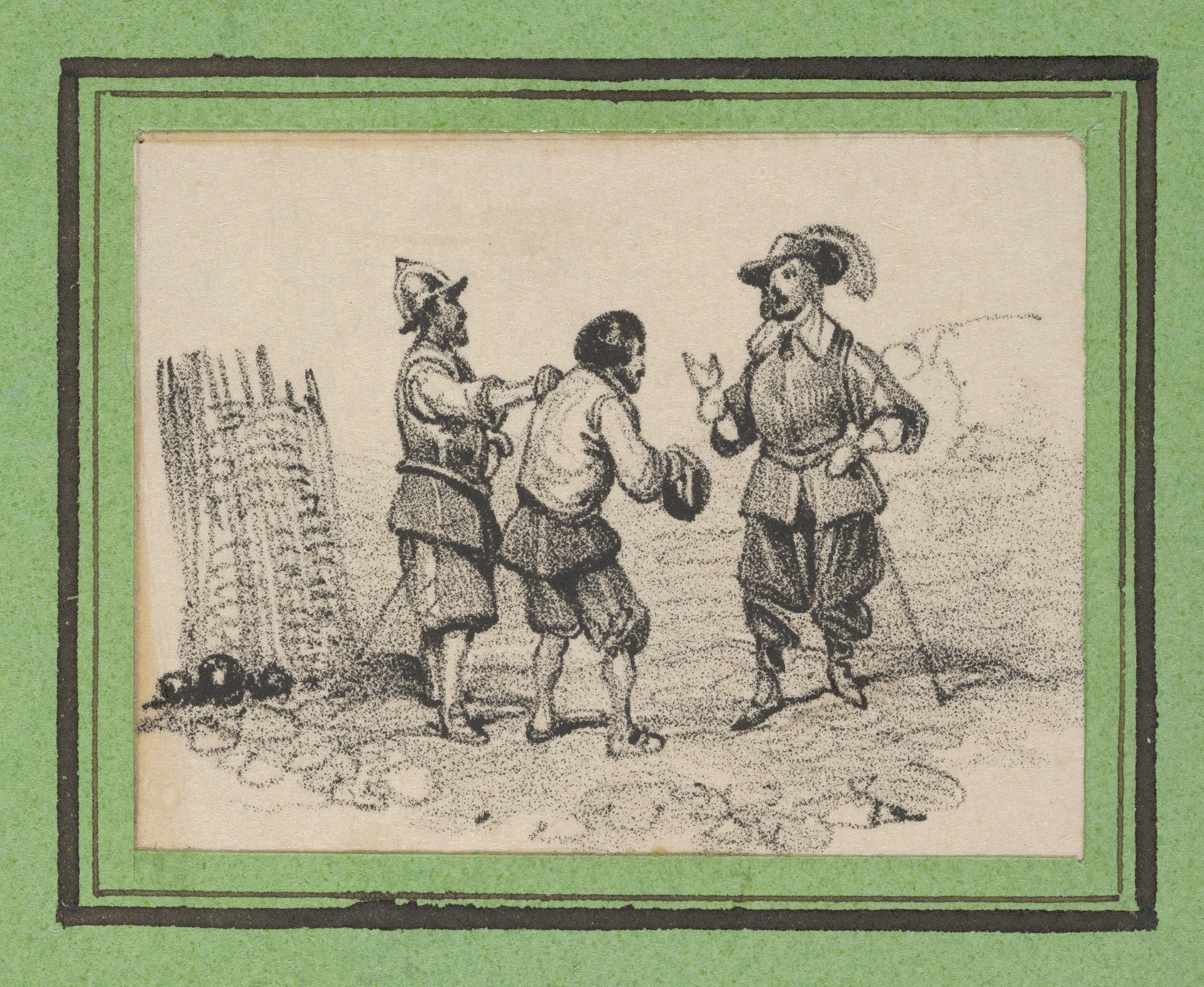
Wiosna(Spring)
Wiosna (Spring) by Michalina Janoszanka, ca. 1920

If you've been playing TTRPG's for a while you've likely seen one of these kind of players. Maybe it's done to show off, or maybe with the intent to help, but in my experience these sorts of players can be a downer for GM's and often take other players out of the fiction; not to mention absolutely ruin any sort tension at the table. Luckily there are a few different approaches to solve this problem, one is the perennial Talk to the offending player, and hash it out strategy, which can highlight if it's an attitude problem and if so; tell 'em to take a hike and find someone better, you deserve good players! Another solution, and one that I utilize often is the Same but Different approach.

If you've taken classes on Creative Writing before you made have heard this saying before but to summarize: When you are writing genre fiction and you want to add a number of original ideas, you need to balance them with 'Normal' things within that genre so that readers (or players) can still feel grounded in the fiction. Think of it like this, if in a D&D game every class was something you've never heard of, every ancestry was completely original (Multi armed slime from outer space!), and even every weapon was named and described as something you aren't familiar with it would be VERY overwhelming to try and make a character and during play it would be even worse! 

"Drak uses his Avader class ability to conjure forth the Atium and throw his Rutul at the Borgesh." Sheesh, what even happened there?

As for what that balance is? Usually they recommendation is 70% 'Normal' and 30% 'Original' but this can fluctuate a bit.

Now you might be saying "That's how a lot of games sound when you first start playing!" and you would be right, however many games also ground the players with things most people ARE familiar with. Even if you don't know TTRPG's you likely know what a sword is, or a Wizard, or (maybe) even an Orc. These concepts are either grounded in real life or are ideas that have escaped containment from Fantasy and therefore can act as something grounding and recognizable for the players. The amount of 'Original' ideas you add in can also increase as time within the fiction increases as players (or readers) become more accustomed to the world and adjust to the fiction that you are telling. Okay with that being said, how does this relate to the 'Seasoned player' issue?

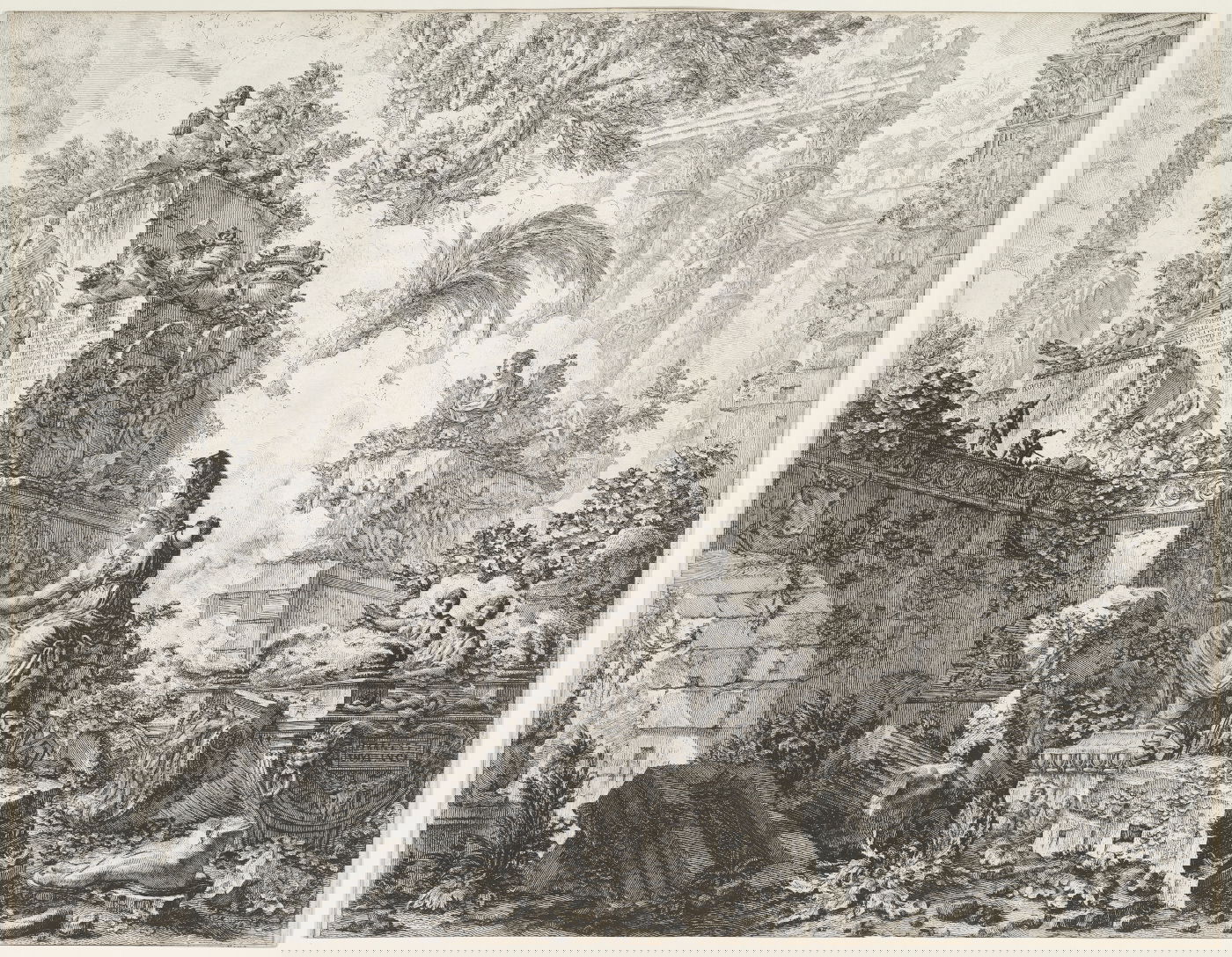
Fantasy Ruins with a Statue of Minerva in the Center Foreground
Fantasy of Ruins with a Statue of Minerva in the Center Foreground by Giovanni Battista Piranesi, ca. 1748

One of the best ways to implement the Same but Different approach is to give your fiction a Fresh Coat of Paint. Even simple goblins can become deeply mysterious and strange when you describe them as "Four armed, bat eared, and covered in thick curly black or brown fur." You can keep their stats completely the same and the players wont be able to tell you what these are unless you tell them. Another implementation is the Engine Swap, take a monster that your players are likely to know and swap it's abilities with a similar creature.† Imagine if the above Troll scenario was followed up by this description:

"As you approach the Troll belches a gout of flame, catching the ground in front of it ablaze. Thick black tar leaks from lesions on its flesh, the pungent scent of burning oil permeates the area." - GM

There is nothing quite like having a set of seasoned players waltz up to a troll and being overconfident only to be put on their back foot when it begins breathing fire. You can get a lot of mileage out of these two approaches and I often find myself using these in every campaign I run, but remember not to overdue it! Having typical monsters and predictable enemies releases the tension that these new Same but Different monsters cause, and makes it more impactful when one does show up. If you feel that this still is not enough feel free to do a Custom Build and make your own creature wholesale!

And remember, if you can't think of what monster cover in a Fresh Coat of Paint the handy dandy BEAR will always due the trick.

†. Try to stay in the same level range as the base monster unless you're well versed in your system of choice and how its balance works.

Sunday, March 8, 2026

RPG Placeholder for the time being.

Here is a preview of the Thief from my upcoming RPG Orto Solis:

Thief

Primary Stat: Dexterity
Prerequisites: None
Proficiency: Bow, Crossbow, sword, dagger, and leather armors. 
Language: Common, Thieves Cant
Level Up:

  • +1d6 to Primary Stat or +1d3 to any other.
  • +1d6 HP.

Roll on the below table for an ability, if you roll a duplicate re-roll unless otherwise indicated:

Abilities

  1. Back-Stab - When using a ranged or one-handed weapon you may double the dice rolled for damage when attacking an enemy who is flat-footed.
  2. Thieves be Thieving - Gain +10% on any Thieving related checks. (Pickpocket, Sneak, Hide, Pick Locks, etc.)
  3. On Edge - You never receive penalties for being flat footed. +15% to on checks to avoid traps, AOE Spells, and Breath Weapons.
  4. Always More Space for Loot - You gain an additional 5 carried inventory spaces that do not count towards encumbrance. (They must be used for valuables).
  5. Twitchy Reflexes - If you are hit by a Trap, AOE Spell, or Breath Weapon, you take half damage.
  6. Return to Shadows - In combat you can roll to Hide with a +10% even when enemy's would normally be able to see you.
Capstone:
Simply Lucky - Rolling doubles always counts as a critical success even when normally it would be a failure.